
Moeve and Exolum have secured €105 million in project financing for the Muelle Sur development at the Port of Huelva, supporting the construction of a new terminal designed to strengthen renewable fuel logistics and Europe’s energy transition.
The financing was arranged through their joint venture, Terminal Puerto Tartessos, with BBVA acting as Sole Bookrunner, Sole Underwriter, MLA and Hedge Coordinator, while Kutxabank participated as Lead Arranger.
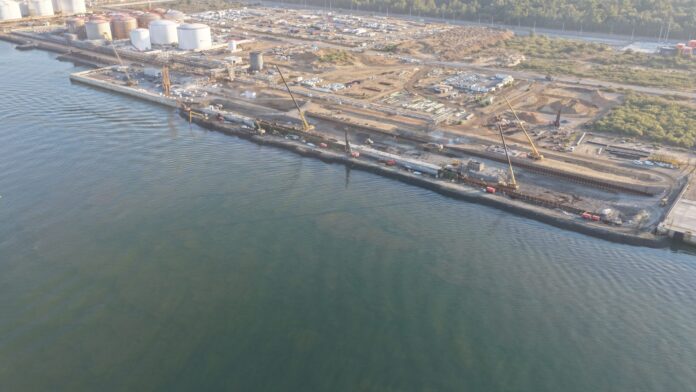
The project has already passed 50% completion. It includes the construction of a 511-metre berth at the Port of Huelva’s Outer Harbour.
The new terminal will modernise the logistics infrastructure serving Moeve’s La Rábida Energy Park and Exolum’s facilities. It will also become a key gateway for raw materials and products linked to Moeve’s second-generation biofuels plant, part of what the company describes as the largest 2G biofuels complex in southern Europe.
The investment will improve vessel loading and unloading operations. It will also increase capacity for handling sustainable feedstocks and renewable fuels while enhancing operational flexibility and safety.
Carmen de Pablo, CFO and Director of Strategy, Sustainability and M&A at Moeve, said the project plays a strategic role in Europe’s energy transition.
“Muelle Sur is much more than a port infrastructure. It is an essential asset to drive the energy transition and strengthen Europe’s autonomy,” she said. “The financing will improve efficiency and provide the logistics capacity needed to advance our green molecule projects in Huelva.”
David Folgado, CFO of Exolum, said logistics remains a key enabler of the energy transition.
“Muelle Sur will provide a more modern and flexible infrastructure capable of handling new energy products,” he said. “It will improve operational efficiency and safety while supporting a more sustainable and competitive industry.”
The companies said the project will strengthen logistics capabilities at the Port of Huelva and support the movement of sustainable raw materials and renewable fuels as demand for low-carbon energy continues to grow.