
Hong Kong is shifting the development strategy of its container port from volume growth towards higher-value maritime and logistics services under the city’s first Five-Year Plan for Economic and Social Development.
The 2026–2030 plan sets out a new direction for Hong Kong Port, with the government aiming to stabilise container throughput while increasing the value generated by the wider maritime and logistics sector.
The government described the strategy as a transition from “volume based to value driven development”, targeting a broader “volume to value” transformation of the port.
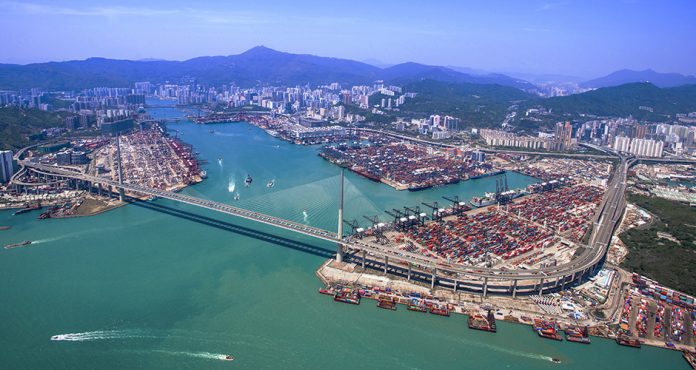
A central part of the strategy will be the modernisation of the Kwai Tsing Container Terminals.
The government plans to work with terminal operators on a roadmap for their smart and green transformation, including greater use of autonomous electric vehicles, remotely controlled cranes and onshore power supply facilities.
Hong Kong will also expand its Port Community System, which is intended to improve the exchange and use of logistics and supply chain data.
More than 8,000 companies have registered with the system since its rollout, while the government plans to extend its capabilities through initiatives including blockchain-based offshore cargo tracking.
Under the Five-Year Plan, Hong Kong aims to reduce carbon emissions from the Kwai Tsing Container Terminals by 30% by 2030 compared with 2021.
The plan also targets the establishment of five Green Energy Corridors by 2030 and aims for 7% of Hong Kong-registered vessels to use green maritime fuels by the end of the decade.
The strategy also focuses heavily on improving Hong Kong Port’s connections with its hinterland and other ports in the Greater Bay Area.
Hong Kong plans to continue developing a comprehensive rail-sea-land-river intermodal transport system, with the government seeking to expand cargo sources and strengthen the port’s position as a transshipment hub for high-value goods.
The government said existing freight connections involving Chongqing, Chengdu, Shenzhen and Hong Kong can reduce cargo transportation times between the Chengdu-Chongqing region and Hong Kong from between two and four weeks to approximately three days.
Further measures will explore cross-province freight operations and river-sea transport, with the broader objective of expanding the port’s cargo hinterland.
Hong Kong also intends to deepen cooperation with ports across the Greater Bay Area rather than compete solely for container volumes.
The plan highlights the differentiated development of Hong Kong’s Kwai Tsing Port and Shenzhen’s Yantian Port as a model for cooperation with other regional ports.
It also calls for the revitalisation of feeder connections between Hong Kong and other Greater Bay Area ports, alongside cooperation with Shenzhen and Huizhou on new cross-border container transport models and river-sea cargo services.
Hong Kong will additionally seek to attract cargo moving between Central and South America and the Greater Bay Area for handling through its port, while expanding into markets including Oceania.
The Hong Kong Maritime and Port Development Board said the measures provide a clear direction for the city’s maritime and port industries, including the transformation of Kwai Tsing and deeper cooperation within the Greater Bay Area port cluster.