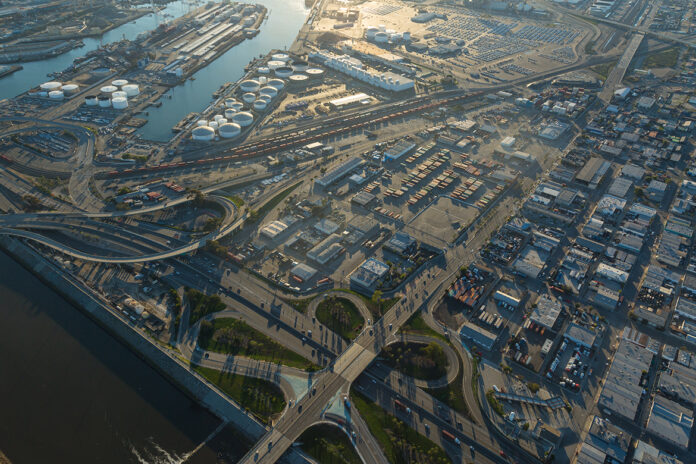

The Port of Long Beach’s 2025 emissions inventory shows emissions per container at an all-time low, even as terminals handled a record of nearly 9.9 million TEUs.
The reductions are attributed to strategic investment in zero-emissions equipment, greater use of shore power and more frequent calls by cleaner ships.
Compared with the prior year, diesel particulate matter fell 7%, nitrogen oxides 9%, sulfur oxides 9% and greenhouse gases 6%.
Since the 2017 update of the Clean Air Action Plan, adopted with the Port of Los Angeles, diesel particulates are down 13%, nitrogen oxides 34% and sulfur oxides 29%.
Greenhouse gases rose 9% over the period, against a 31% increase in container throughput.
Since 2005, the 20th anniversary year of the Clean Air Action Plan, diesel soot has fallen 91%, nitrogen oxides 70 percent, sulfur oxides 98% and greenhouse gases 9%, while throughput grew 47%. Last year also marked 20 years since the port adopted its Green Port Policy.
Other highlights of the inventory:
To accelerate the move toward a carbon-free future, the port will launch new initiatives over the next year: a truck utilisation incentive programme to increase use of zero-emissions trucks, an enhanced zero-emissions truck voucher programme, an update to the Green Ship Incentive Program to attract cleaner vessels, and continued work on a zero-emissions infrastructure plan to boost deployment of zero-emissions cargo-handling equipment, harbour craft and locomotives.
Harbor Commission President Steven Neal said the findings confirm that the port can be a strong jobs engine while protecting the environment.
CEO Dr Noel Hacegaba said the port is focused on building the Port of the Future, a safe, resilient and zero-emissions port, and that the inventory shows it is on the right track, though more remains to be done.