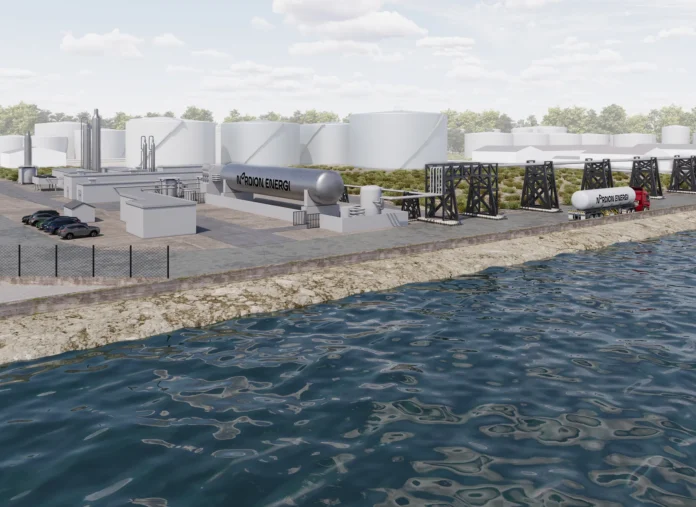

Construction of the biogas liquefaction plant at the Port of Gothenburg has reached an important milestone with the installation of the facility’s liquefied biogas storage tank.
The plant is scheduled for completion in the second quarter of 2027 and is expected to make Swedish biogas more accessible to more sectors, not least shipping.
LBG is a renewable, low-climate-impact fuel that can replace fossil alternatives, and interest in it is growing rapidly in the shipping sector.
Groundworks, including foundations and base slabs, are complete, and the tank is the first of the plant’s key components to be installed. It arrived at the port by vessel, has a volume of 500 cubic metres, weighs close to 140 tonnes and will be able to store up to 200 tonnes of LBG once the facility is operational.
Once finished, the plant will be able to deliver 250 gigawatt-hours of LBG a year, equivalent to the consumption of 500 trucks or the bunkering of 50 vessels.
It will be the first liquefaction plant in Sweden connected directly to the west Swedish gas grid, creating a new market for Swedish biogas producers that are, or want to become, connected to the grid.
Producers and users are already present at the port: ST1 Biokraft has signed an agreement securing part of the plant’s capacity, and several shipping companies that call regularly already use LBG to power their vessels.
Therese Jällbrink, Head of Renewable Energy at the Port of Gothenburg, said shipping’s transition requires a collaborative value chain, that the facility strengthens the port’s position in renewable bunker fuels and allows LBG to be offered to shipping on a larger scale, and that the growing number of vessels on order for LBG operation points to strong potential for increased bunkering.
Carolina Wistén, Head of Customer and Market, Gas Grid, at Nordion Energi, said the facility is starting to take shape and brings the goal of delivering LBG from the gas grid to shipping, heavy transport and industry closer.