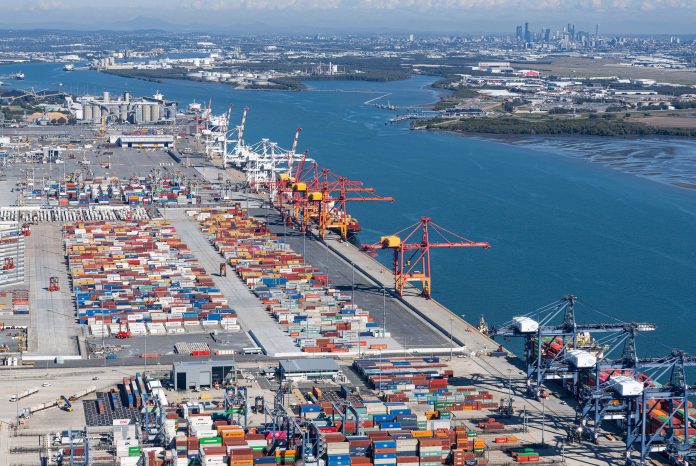

The Port of Brisbane has made its Green Button functionality available for deep draft vessel movements, meaning vessels with a draft exceeding 12 metres, within its 90-kilometre shipping channel.
The tool is designed to maximise vessel efficiency and minimise emissions by identifying optimal transit speed profiles that reduce fuel consumption within designated arrival and departure windows.
It draws on forecast wind, currents, tides and water depth to calculate efficient transit plans and to estimate potential emissions reductions against standard operating profiles.
Green Button is the latest addition to the Nonlinear Channel Optimisation Simulator (NCOS) Online, developed with DHI Seaport, following the release of enhanced planning and weather modules earlier this year.
NCOS Online has been in use at the port since 2017 and provides a seven-day detailed forecast of a vessel’s under keel clearance and environmental conditions, allowing dynamic scheduling.
It enables stakeholders including the Regional Harbour Master to determine safely and accurately the clearance needed for larger vessels, and it is also used to inform safe operating and environmental parameters for some landside operations.
Port of Brisbane CEO Neil Stephens described the Green Button as world-class, leading-edge technology developed in Brisbane that offers a chance to cut shipping-related emissions while keeping vessel scheduling safe, reliable and effective.
Following highly successful trials in 2024, it is now enabled to support stakeholders planning and managing deep draft movements.
Stephens said the continued development of NCOS Online reflects the aspiration for Brisbane to become a more efficient, connected and sustainable port, and thanked DHI Seaport, Maritime Safety Queensland’s Regional Harbour Master, Poseidon Sea Pilots and shipping line customers Maersk and CMA CGM for their collaboration during the trial and implementation phases.