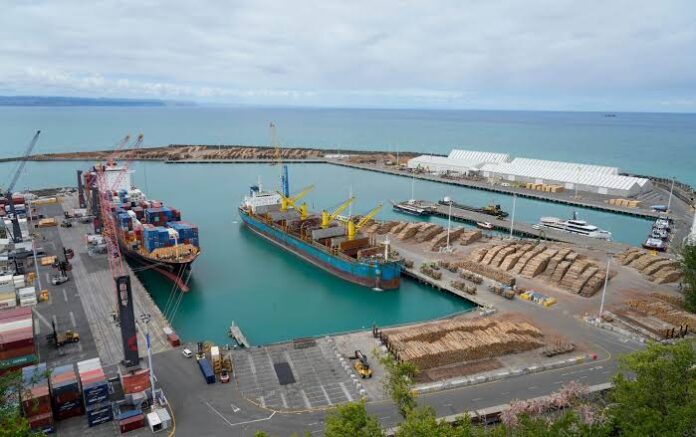
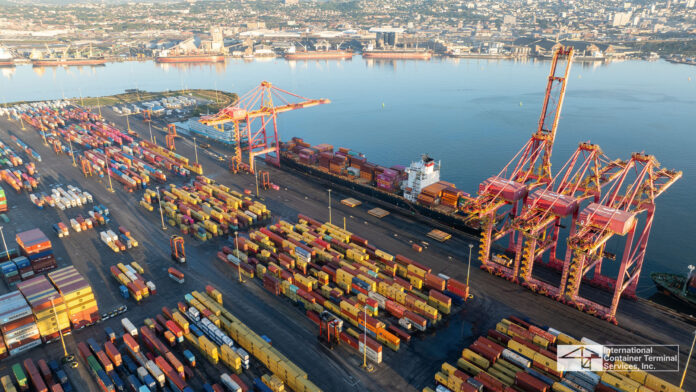

International Container Terminal Services, Inc. reported double-digit growth in volumes, revenues and earnings for the first nine months of 2026.
Consolidated volume reached 12,114,429 TEUs in the nine months, up 13% from 10,687,128 TEUs. Third-quarter throughput was 8% higher at 3,998,671 TEUs against 3,698,053 TEUs.
Revenue from port operations rose 24% to US$ 2.90 billion from US$ 2.34 billion, and EBITDA rose 21% to US$ 1.87 billion from US$ 1.54 billion.
Net income attributable to equity holders increased 20% to US$ 898.89 million from US$ 751.56 million, driven mainly by higher operating income.
The increase came mainly from two new terminals: Durban Gateway Terminal, which took over port operations of DCT Pier 2 in South Africa in January 2026, and Batu Ampar Container Terminal in Batam, Indonesia, which began operating in September 2025.
Improved trade in Asia and the Americas also helped, partly offset by lower volumes at certain EMEA terminals, mainly Basra Gateway Terminal in Iraq because of the Middle East conflict, and by the deconsolidation of Yantai.
Excluding the new and discontinued operations, volume would have edged up 0.1%.
Revenue growth reflected higher volumes with a favourable container mix, more ancillary services, tariff adjustments at certain terminals, contributions from Durban and Batam, and favourable currency translation from the Mexican peso, Australian dollar and Brazilian real.
These were partly offset by the Basra decline, the Yantai deconsolidation and the weaker Philippine peso. Excluding new and discontinued operations, revenue would have grown 15%.
EBITDA margin declined to 64 percent from 66 percent because of the integration of newly acquired operations; excluding them, EBITDA would have grown 15% and the margin would have improved slightly to above 66%.
Chairman and President Enrique K. Razon Jr. said the diversified portfolio provides resilience in a more challenging operating environment, that the focus remains on integrating new terminals and investing in capacity and service levels, and that disciplined capital allocation and operational execution remain central to delivering sustainable shareholder value.