
The Port of Barcelona handled 35.87 million tonnes of cargo during the first half of 2026, a 3.5% increase compared with the same period last year, driven by growth in containers, vehicles, bulk cargo and passenger traffic.
Container throughput reached 1.93 million TEUs, up 4.3% year-on-year. Import containers recorded particularly strong growth, rising 6.7% to 380,000 TEUs. The port also reported increases in liquid bulk (+4.1%), dry bulk (+5.1%), vehicle traffic (+6.5%) and ro-ro cargo (+2.8%).
Passenger traffic climbed 4.1% to 2.44 million movements. Ferry passengers increased 2.5%, while cruise passenger traffic rose 3.4% to just over one million visitors.
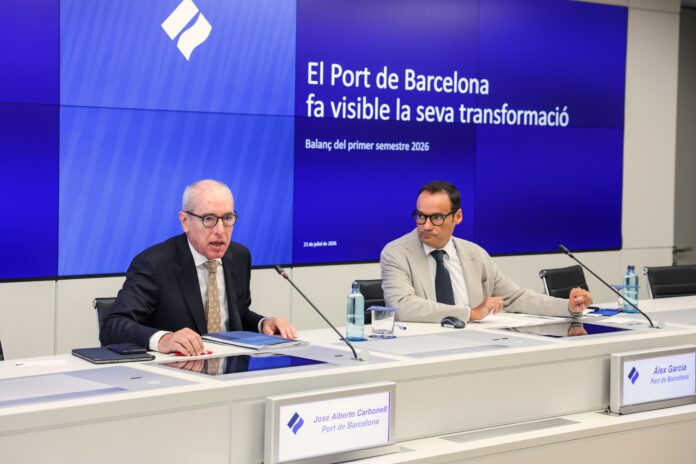
Port of Barcelona General Manager Àlex Garcia said the results demonstrate the port’s resilience despite geopolitical tensions and trade uncertainty. He noted that the port continued to increase liquid bulk volumes by diversifying supply sources despite disruptions linked to tensions in the Persian Gulf and the Strait of Hormuz.
Vehicle traffic reached 386,000 units, with imports increasing 36%. The port said 45% of imported vehicles were hybrid, plug-in hybrid or fully electric models, while China accounted for 50% of all vehicle imports, reinforcing Barcelona’s role as a gateway for Asian vehicle manufacturers into southern Europe.
During the first half of the year, the port also advanced several major infrastructure projects, including new road and rail access, additional liquid bulk berths, electrification works at the Adossat Wharf, and the development of the Nou Llobregat terminal.
Port President José Alberto Carbonell announced that radioelectric compatibility studies carried out with ENAIRE confirmed that the planned expansion of the port’s southern area is compatible with both the current and future operations of Barcelona-El Prat Airport. The finding allows the port to proceed with future container terminal developments in the area.
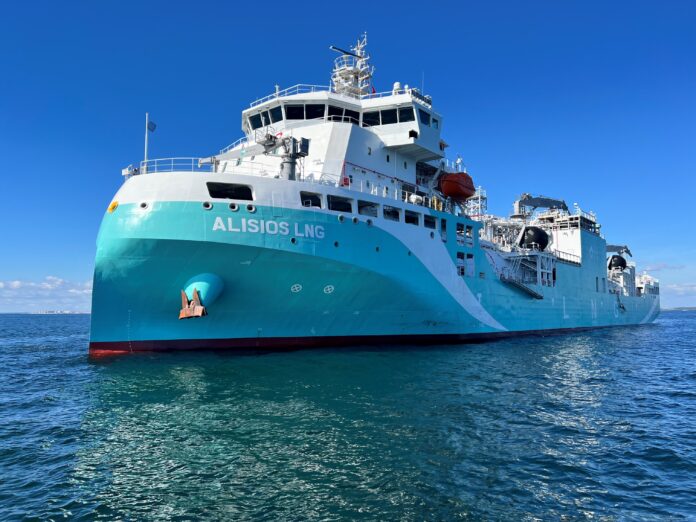
The port also continued investments in sustainability, awarding contracts for its first hydrogen plant, expanding shore power (OPS) infrastructure for cruise terminals, and carrying out one of its first bioethanol bunkering operations for a container ship.
In innovation, construction began on the BlueTechPort, a €60 million project aimed at creating a major European hub for the blue economy, while the port strengthened cooperation with the Port of Shanghai on digitalization, safety, sustainable shipping corridors and alternative fuels.
The Port of Barcelona also confirmed that Cruise Terminal C will close on 30 October, followed by the South Terminal on 31 December, as part of its agreement with the Barcelona City Council to develop a more sustainable cruise model.