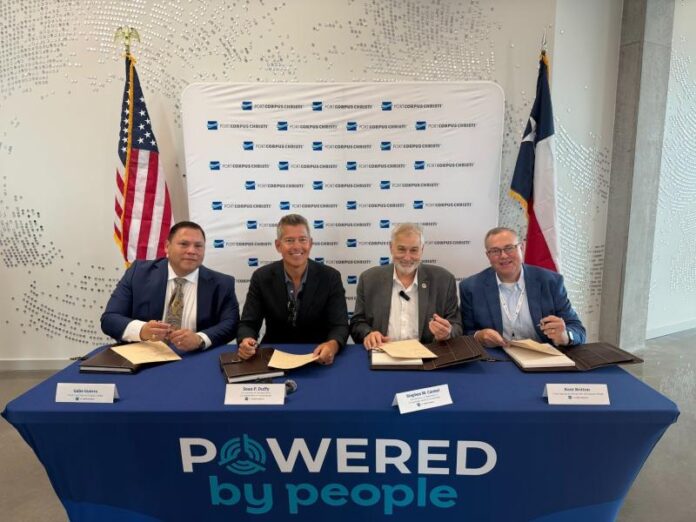

The U.S. Maritime Administration (MARAD) and the Port of Corpus Christi have signed an agreement to explore the use of small modular reactor (SMR) technology in maritime applications.
The partnership will examine potential uses for nuclear technology across port energy systems, microgrids and future vessel propulsion.
It is the second agreement signed under the U.S. Department of Transportation’s SMR initiative, which was launched in May 2026.
Under a Memorandum of Cooperation, MARAD and the Port of Corpus Christi will explore several potential applications for advanced energy technology.
These include the integration of SMRs, resilient port microgrids and shoreside power systems.
The partnership will also examine infrastructure that could support emerging vessel propulsion technologies and related workforce development.
“Small modular reactors have the potential to reshape America’s maritime sector, lower shipping costs, and bolster our supply chains,” said U.S. Transportation Secretary Sean P. Duffy.
Maritime Administrator Stephen M. Carmel said the technology could strengthen the resilience of Gulf Coast maritime supply chains.
He pointed to potential benefits during extreme weather events and power grid disruptions.
SMRs could also provide energy for port operations and potentially support future maritime propulsion systems.
The Port of Corpus Christi is a major U.S. energy gateway. It is the country’s largest port for petroleum exports and also handles significant LNG shipments.
“With this agreement, the Port of Corpus Christi affirms its commitment to work with the Administration to promote innovation in the U.S. maritime sector,” said Jeff Pollack, Chief Strategy and Innovation Officer for the Port of Corpus Christi.
The agreement is exploratory and does not announce the construction or deployment of a nuclear reactor at the port.
Instead, it establishes cooperation between MARAD and the port to assess how SMRs and related technologies could be used in future maritime and port operations.