
The Port of Hamburg is seeing more empty containers move by rail as operators seek to reduce truck traffic and improve hinterland logistics.
Hamburg Container and Chassis Repair (HCCR), a subsidiary of HHLA, is expanding rail movements from its depot on Altenwerder Damm.
In 2025, around 20,000 TEUs of empty containers were transported by rail from the facility to inland destinations. HCCR expects the trend to continue during 2026.
Shipping lines, freight forwarders and container leasing companies are increasingly using the service.
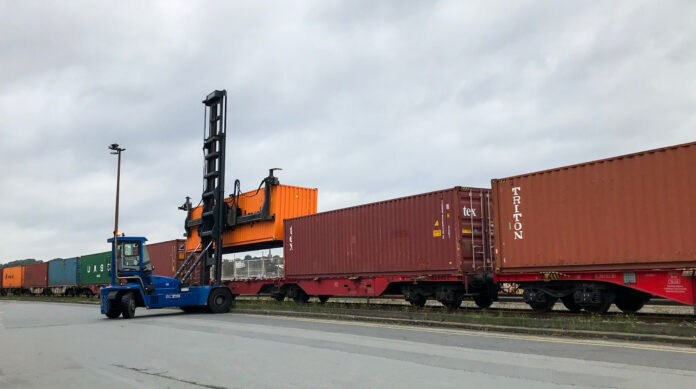
Large volumes of empty containers can be consolidated at the HCCR depot before being loaded onto block trains.
The growth follows the reactivation of a railway siding at the facility.
HCCR returned the previously decommissioned track to service in 2015. A comprehensive refurbishment was completed in 2022.
Since then, rail volumes at the depot have increased steadily.
The facility can now handle block trains of up to 720 metres in length.
Each train can transport around 100 containers at a time.
This allows HCCR to move large numbers of empty containers without relying on individual truck journeys.
“By shifting the transport of empty containers to rail, we are relieving pressure on road traffic in the Port of Hamburg and on German motorways,” said Jens Gutsch, Managing Director of HCCR.
He added that the shift also helps reduce emissions and strengthens rail connections between Hamburg and its hinterland.
The main destinations for the empty containers are southern Germany and Austria.
Before leaving Hamburg, containers are inspected and repaired at the HCCR facility.
Many are then supplied to automotive companies and their suppliers, which use the equipment to load export cargo.
Once loaded, the containers return through the Port of Hamburg. They are then transferred to seagoing vessels for international shipment.
HCCR said expanding rail transport should improve the efficiency of empty container movements while supporting the wider shift of freight from road to rail.