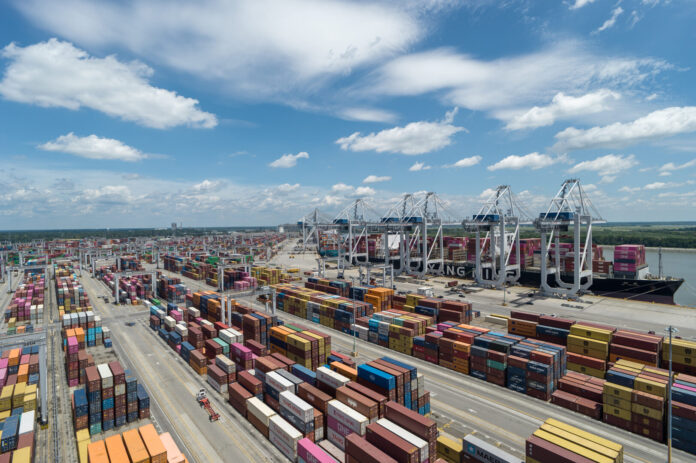
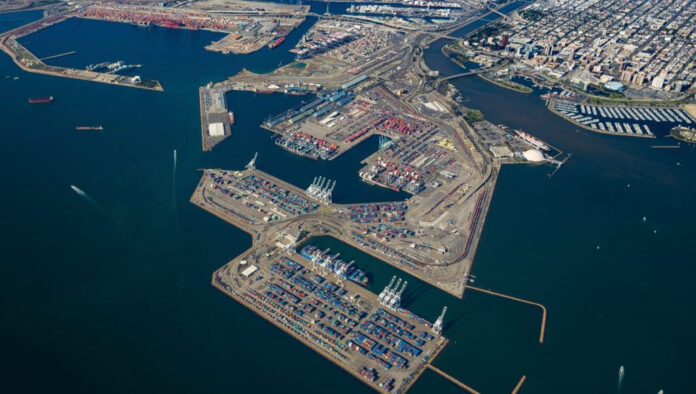

The Port of Long Beach handled 928,508 TEUs in July 2026, marking the second-busiest July in its history as shippers moved cargo ahead of new US tariffs.
Despite the strong monthly volume, throughput was 1.7% lower than in July 2025.
July was only the seventh month in the port’s 115-year history in which container volumes exceeded 900,000 TEUs.
Port CEO Dr. Noel Hacegaba said the strong volumes reflected a final push by companies ahead of the 24 July expiration of the temporary tariff programme.
“This capped an early peak season as companies continued to navigate tariff uncertainty, higher fuel costs and other global issues,” said Hacegaba.
“Our strong import numbers show that the supply chain continues to be resilient and adapting to this new normal,” he added.
Imports remained almost unchanged year on year, declining 0.1% to 467,461 TEUs.
Exports, however, increased 14.8% to 104,843 TEUs, while empty container movements fell 7.4% to 356,205 TEUs.

Between January and July, the Port of Long Beach handled 5,758,086 TEUs, up 1.2% compared with the same period in 2025.
Long Beach Harbor Commission President Steven Neal said customers continue to use the port for reliable and efficient cargo movements.
“We offer certainty in unpredictable times and customers see the value in what we can provide,” said Neal.
Looking ahead, the port is monitoring global economic conditions, consumer demand, trade policies and geopolitical developments for their potential impact on cargo volumes.
“Businesses can’t control trade policy, geopolitical events or energy markets; what they can control is how quickly they respond,” said Hacegaba.
The Port of Long Beach is also progressing with its long-term infrastructure programme. It plans to invest US$3.3 billion over the next decade as part of its strategy to modernise infrastructure and improve cargo efficiency.
Under its 2050 vision, the port aims to increase annual container handling capacity to 20 million TEUs.